Become a Cosmetic Injector: The Art and Science
Have you been searching for a new practice in the medical field that lets you work in both the scientific and artistic realms? If you answered yes, medical aesthetics and cosmetic injections could be your match. Why not become a cosmetic injector? This profession lets you combine artistic elements while still working firmly within the medical field.
Cosmetic injectors are vital players in the booming world of medical aesthetics. They leverage a unique set of medical skills and expertise, blended with creativity, to help clients look and feel their best. As a medical injector, you unlock significant earning potential — the high demand for procedures like Botox and dermal fillers offers a lucrative, stable career path, and cosmetic injectors often have the freedom to set their own schedules, offering more independence than most other medical roles provide.
Who Can Become A Cosmetic Injector?
 The requirements to become a cosmetic injector vary by region and require a healthcare background. If you are a Registered Nurse (RN), Nurse Practitioner (NP), Physician’s Assistant (PA), doctor, dentist or other qualified healthcare professional, you can become a cosmetic injector. Completing a cosmetic injector course can provide the specialized training needed to build your knowledge and skills in aesthetic injections. Becoming one allows healthcare professionals to combine medical knowledge with a creative outlet, often bringing more personal satisfaction than a traditional clinical role, thanks to the direct role you play in boosting a client’s self-confidence.
The Science Behind A Cosmetic Injector

Working as a cosmetic injector is as much an art as it is a science. It’s important to have a thorough understanding of anatomy, safe injection protocols, and product knowledge — a significant portion of cosmetic injector training focuses on precise safety training, understanding potential risks associated with treatments, and knowing how to properly handle adverse reactions if they occur.
The Art Behind A Cosmetic Injector
Equally as compelling as the science is the opportunity to tap into your artistic skills. As a cosmetic injector, you become something like a sculptor, using your ability and discerning eye for beauty, symmetry and proportion to create customized treatment plans for your clients. Each client has unique facial features and personal aesthetic goals, and a cosmetic injector with a strong artistic sensibility can tailor treatments to each individual, enhancing their natural beauty rather than applying a one-size-fits-all approach.
Many cosmetic injectors consider the classic principles of beauty, like the golden ratio, as a guide — not to create a “perfect” face, but to enhance a client’s natural features and bring balance to their unique facial structure. National Laser Institute prides itself on being a leader within the cosmetic injection industry, and is proud to have created one of the first facial balancing courses that includes neurotoxins and dermal fillers. All faces are different, which means the best cosmetic injectors weigh a range of factors to achieve harmonious, natural-looking results while still respecting each client’s individuality. A great cosmetic injector, in the end, blends the principles of art and science to enhance their client’s natural beauty.
From Burnout To A Career You Love
If you’re a nurse or physician who’s been clocking into a grueling shift while your peers post about their fantastic new jobs in med spas and posh clinics, you’re not imagining things. Burnout among medical practitioners is a very real, alarming issue. Nurse.org reports that as many as 15.6% of nurses admit to being burned out of their profession, and in the same survey of 2,000 registered nurses, a striking 41% admitted to being “unengaged” with their job. That level of disengagement isn’t a personal failing — it’s a reasonable response to the extraordinary demands placed on healthcare workers. But it doesn’t have to be permanent.
Botox careers are a genuinely viable option for nurses and physicians wanting real change. The global aesthetics market has been projected to reach more than $17 billion, driven by the growing popularity of noninvasive and minimally invasive cosmetic procedures. Medical professionals of every kind are enrolling in Botox training and certification to join this evolving field — and reaping real rewards for their forward-thinking career change.
Part-time and full-time side hustles boutique opportunities are completely up to you!
The Evolution Of Cosmetic Injectables
Cosmetic injectables have come a long way since gaining popularity in the late 1990s and early 2000s. Early Botox treatments were often used to completely erase facial movement, leaving clients with an unnatural “frozen” appearance — the touchstone of overdone Botox, sometimes nicknamed the “Spock Brow” for its hardened, arched-eyebrow look. Dermal fillers of that era followed a similar pattern: overfilled lips, puffed-up cheeks, and exaggerated contouring popularized by celebrities and a lack of nuanced technique.
Today’s approach looks completely different. Modern techniques like micro-dosing Botox and using smaller, more precise amounts of filler have revolutionized the industry, allowing for subtle, natural-looking results that preserve a client’s normal range of expression rather than freezing it. Instead of a one-size-fits-all treatment, today’s cosmetic injectors prioritize balance, harmony, and each client’s individuality — a shift that reflects a broader cultural move toward authenticity, and part of why demand for skilled, artistically-minded injectors keeps climbing.
A Day In The Life: From Consultation To Follow-Up
Success as a cosmetic injector isn’t only about injection technique — it’s about the entire client journey. The first consultation sets the stage: the injector meets with the client to discuss expectations, assess facial structure, and review medical history, all while building the trust that makes a client comfortable moving forward. For many clients, the idea of getting an injection can feel intimidating, so this step doubles as a safe space to address concerns and set realistic expectations about what dermal fillers and Botox can and can’t do.
From there, treatment itself typically takes 30 to 60 minutes, depending on the area and product used. Dermal fillers are commonly placed in the cheeks, the nasolabial folds, the lips, and the under-eye hollows. Results are visible immediately, though mild bruising or swelling may take a few days to subside, and final results are usually apparent within one to two weeks. Most dermal fillers last between six months and two years, which means follow-up appointments become a built-in, recurring part of the job — a steady source of return clients and ongoing revenue.
One of the most rewarding aspects of this work is how quickly results show. Unlike many areas of medicine, where the impact of your work may take weeks or months to become clear, a cosmetic injector gets to see the direct outcome of their effort at the end of nearly every appointment — a genuine, immediate sense of accomplishment that many describe as a driving factor in why they love the work.
Why The Demand Keeps Growing
The shift away from surgical procedures and toward safer, minimally invasive treatments has reshaped the entire beauty industry. A recent snapshot of the field found more than 7.5 million people received Botulinum toxin injections in a single year, with an additional 2.6 million receiving dermal or other soft-tissue procedures — and invasive surgical procedures continuing to decline as minimally invasive options like Botox and fillers grow. Over 8,000 medical spas have blossomed in the U.S with far more physicians expanding into this space. 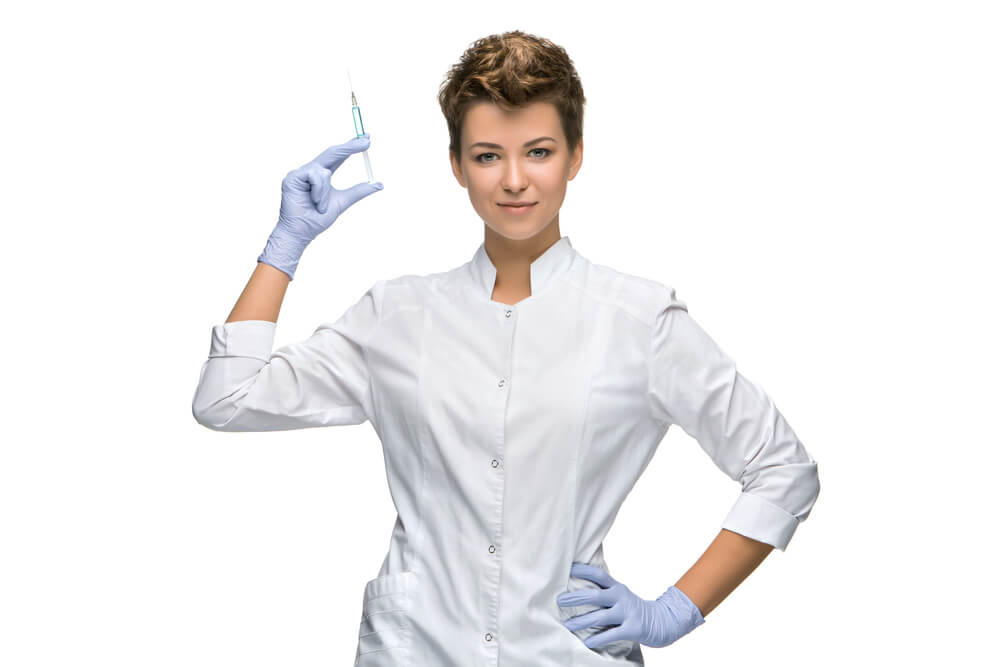 A few forces are driving that shift: treatments that were once available only to a select few are now more accessible and affordable than ever, results are visible almost immediately rather than requiring months of recovery, and the modern beauty industry increasingly celebrates individuality over one-size-fits-all standards. All of this adds up to a more diverse clientele and more opportunity for cosmetic injectors entering the field today than at almost any point in the industry’s history.
How Much Do Botox Injectors Make?
This is where all of this has been heading, right? Keep in mind that pay ranges vary by location, demand, competition and services rendered among other factors; but the numbers are consistently strong.
For those researching a Botox injector salary, these figures highlight the earning potential available in the growing field of medical aesthetics. Aesthetic nurses specifically tend to see even stronger numbers: average annual pay for a Botox Nurse ranges between $130,000 to $230,000 across the United States, with jobs frequently offering generous paid time off and full dental, vision, and health benefits. For those who have an entrepreneurial spirit and want to open their own med spa or cosmetic injection practice the sky is the limit!
The math behind a single visit helps explain why. The average amount of Botox injected per patient in one visit is around 45 units; at roughly $15 per unit (pricing varies by state and county), a single client visit can run $400 to $600. You’ll typically want to schedule 20 to 30 minutes per patient for a Botox appointment, but the actual injection itself takes only about two minutes — meaning the fast treatment time and incremental revenue potential make the investment in Botox training worthwhile many times over.
The Earning Potential
It genuinely pays to know how to administer Botox and fillers. The average amount of Botox injected per patient in one visit is around 45 units; at roughly $15 per unit, a single client visit can run $400 to $600. You’ll typically schedule 20 to 30 minutes per patient for a Botox appointment, though the actual injection itself takes only about two minutes — meaning the fast treatment time and incremental revenue potential make the investment in training worthwhile many times over. Aesthetic nurses specifically tend to see strong annual pay, commonly ranging from $160,000 to $230,000 across the United States, with many positions offering full benefits and generous paid time off on top of that.
Marketing Your New Skills
Once you’re trained and certified, being a successful Cosmetic injector is about more than skill alone, it is about marketing your services as well. One realtor in Southern California, for example, once raffled off $300 worth of Botox treatments at an open house to attract prospective homebuyers, a savvy way to target clients who could afford (and likely enjoy) the treatment. You don’t need to be a realtor to borrow the idea: offering local business professionals gift certificates, running group specials for weddings and events or posting monthly online deals are all creative ways to get the word out.
Botox remains the #1 nonsurgical cosmetic treatment in the nation, with millions of people receiving treatments every year — from those in their forties and fifties looking to erase wrinkles to twenty-somethings turning to Botox preventatively. There are even niche audiences, like so-called “Pokertox” clients who want the treatment specifically to help maintain a poker face during tournaments. What works for one cosmetic injector’s marketing may not work for another, so it’s worth generating ten or so ideas tailored to your own location and demographic — and trying, and trying again, until something clicks.
National Laser Institute
Embarking on a career as a cosmetic injector can be both professionally and personally rewarding. This role offers excellent earning potential, a high degree of autonomy, and the opportunity to use your artistic skills in a meaningful way every single day.
National Laser Institute’s cosmetic injector training program positions you to take full advantage of both the scientific and artistic aspects of this work. Our premium, comprehensive training is designed to equip you with technical skills while helping you hone the artistic sensibility you’ll need to succeed in this booming industry. During our CE/CME Online Cosmetic Injections Course, you’ll receive online classroom instruction and demonstrations covering:
- Botox
- Dermal fillers
- Off-label Botox and fillers
- Biostimulators
- PRP
- PDO threads
- Microneedling with PRP
Then, choose one of our nationwide locations to complete your hands-on clinicals for genuine, real-world experience.
National Laser Institute is recognized as gold standard education and is the leader in the medical aesthetics industry. Start your journey and view our courses, which will prepare you to feel confident and ready to inject in as little as a 2-day weekend. To learn more, contact National Laser Institute today or call 800-982-6817.
About the Author
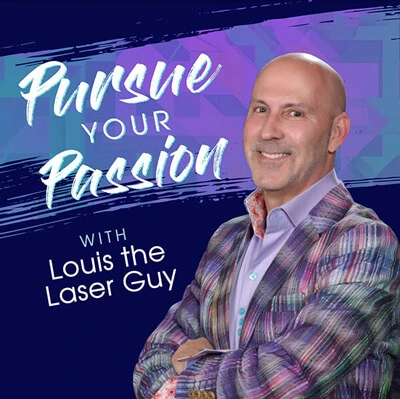
Louis J. Silberman is the CEO and Co-Founder of National Laser Institute, the pioneer of the medical aesthetics training industry and the largest educator in the country. NLI also operates one of the busiest medical spas in the country, seeing up to 3,000 clients per month. Louis Silberman is also an entrepreneur who has been named Ernest and Young’s EY Entrepreneur of the Year Semifinalist.