Medical Aesthetics Training for Physicians: Dr. Krch’s Botox & Filler Case Study
How One Preventive Medicine Physician Added Medical Aesthetics to His Practice: Dr. Krch’s Case Study
Many physicians reach a point where traditional medicine begins to feel harder than it should.
The patient volume keeps growing.
The paperwork follows you home.
Insurance reimbursement feels unpredictable.
And even when the practice is successful, the schedule can still feel impossible.
That was the reality for Dr. Krch, a preventive medicine physician who saw a major opportunity hiding inside his own patient base.
His patients trusted him. They came to him for preventive care, wellness guidance, and long-term health. But more and more, those same patients were asking about Botox, dermal fillers, laser treatments, and other aesthetic services.
And when he did not offer those services at the level they wanted, they went somewhere else.
This is the problem many physicians are facing now. Patients are not only looking for sick care. They want wellness, prevention, confidence, longevity, and aesthetic treatments from medical providers they already trust.
For Dr. Krch, medical aesthetics was not just a trend. It became a way to better serve existing patients, add cash-pay services, and build a more flexible practice model.
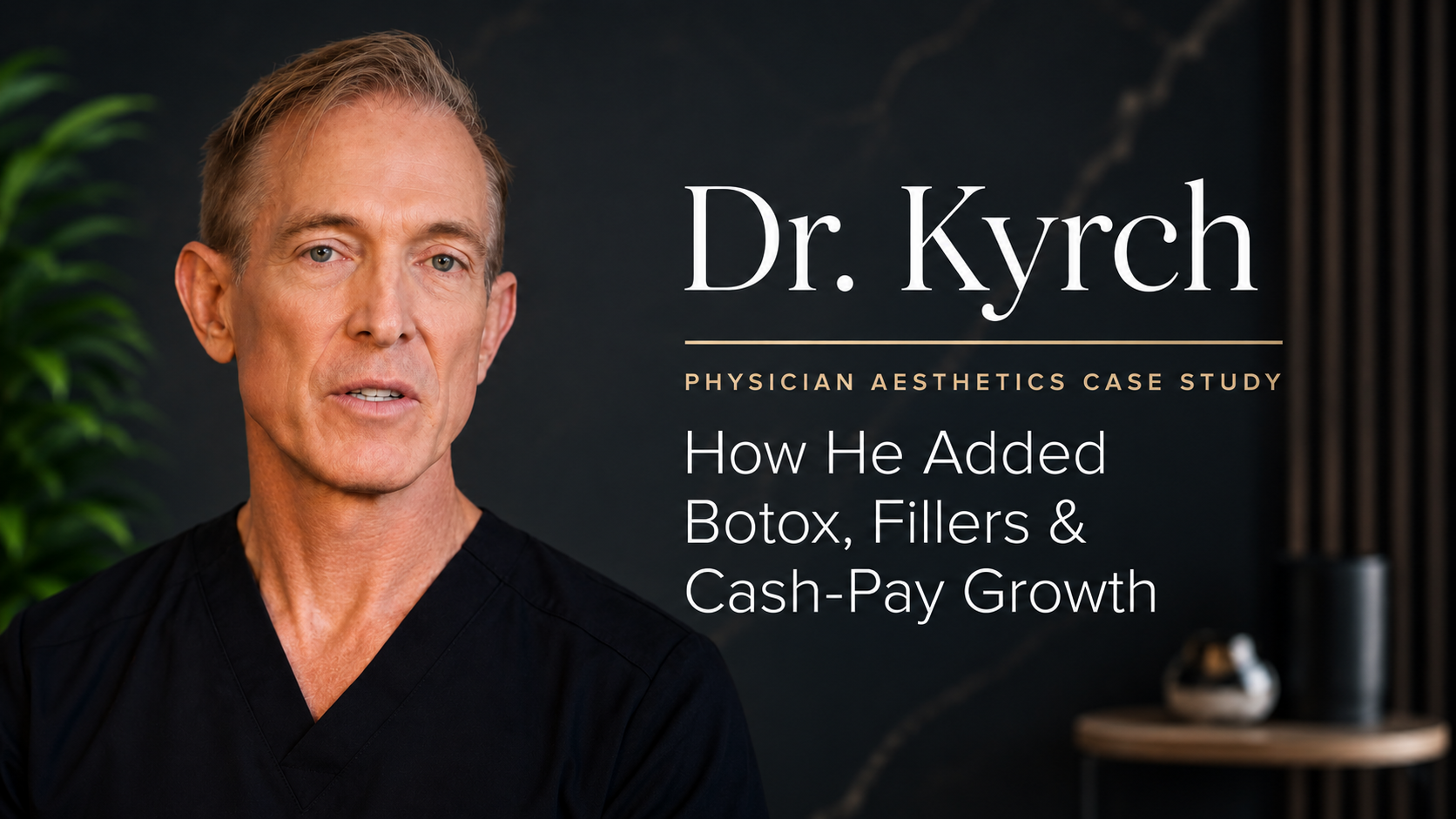 The Problem: Patients Wanted Aesthetic Treatments, But Dr. Krch Needed the Right Training
Dr. Krch already understood medicine. He understood patient care. He understood trust.
But aesthetics required a different kind of confidence.
Patients were asking about Botox, fillers, and lasers. He saw the demand. But he also knew these were medical procedures that required proper technique, anatomy knowledge, patient assessment, safety protocols, and hands-on experience.
Like many physicians, he had concerns:
Could he safely add injectables to his practice?
Would his patients trust him for aesthetic treatments?
Could he compete with local med spas and aesthetic clinics?
Would one poor result damage his reputation?
How could he add a new revenue stream without adding more chaos to his schedule?
The opportunity was obvious. But so was the risk of doing it the wrong way.
That is why Dr. Krch chose hands-on medical aesthetics training through National Laser Institute.
The Turning Point: One Weekend of Hands-On Botox, Filler, and Laser Training
Dr. Krch did not need another abstract lecture. He needed practical training that would help him move from interest to implementation.
Through National Laser Institute’s Fast Track CME training, he received hands-on instruction in high-demand aesthetic procedures such as Botox, dermal fillers, and laser treatments.
The difference was the clinical setting.
Instead of learning only from slides or mannequins, Dr. Krch trained in a real aesthetic environment with real patients, real neurotoxins, and expert instructors guiding the process.
For a physician entering medical aesthetics, that distinction matters.
A weekend of structured, hands-on training helped him connect his existing medical knowledge with the real-world techniques needed for aesthetic patient care.
Why Medical Aesthetics Made Sense for a Preventive Medicine Physician
Preventive medicine and aesthetics are more connected than many doctors realize.
Patients who invest in preventive care often care about how they feel, how they age, how they present themselves, and how much control they have over their health and appearance.
That made aesthetics a natural extension of Dr. Krch’s practice.
Instead of watching patients leave for Botox, fillers, and laser treatments elsewhere, he could begin offering those services under the same trusted medical roof.
For patients, this created convenience.
For the practice, it created a new cash-pay service line.
For Dr. Krch, it created a path toward more flexibility, more control, and a broader way to serve the people already in his care.
The Strategy: Serve Existing Patients Before Chasing New Ones
One of the biggest advantages physicians have when adding medical aesthetics is trust.
Dr. Krch did not need to start from zero. He already had patients who knew him. He already had clinical credibility. He already had relationships.
That meant medical aesthetics could be introduced to the people most likely to say yes first: existing patients.
This matters because many physicians assume they need a major marketing campaign to add Botox, filler, or laser services.
In reality, the first opportunity is often already inside the practice.
Patients may already be going elsewhere for:
Botox
Dysport
Xeomin
Dermal fillers
Skin rejuvenation
Laser treatments
Anti-aging consultations
Preventive aesthetic care
When a physician can provide these services safely and confidently, the practice becomes more complete. Patients can receive medical care and aesthetic treatments from someone they already trust.
The Result: More Confidence, Better Patient Retention, and a Cash-Pay Growth Opportunity
After completing his hands-on medical aesthetics training, Dr. Krch was able to approach aesthetics with more confidence.
He was no longer simply interested in adding Botox and fillers. He had trained in a clinical environment, practiced with supervision, and developed a clearer plan for bringing these services into his practice.
The shift gave him three important advantages.
1. He Could Say Yes When Patients Asked About Aesthetics
Before training, patient requests created hesitation.
After training, those requests became opportunities.
Instead of sending patients to med spas or competitors, Dr. Krch could begin positioning his practice as a trusted destination for both preventive care and aesthetic treatments.
2. He Added Cash-Pay Services Outside the Insurance Model
Medical aesthetics is attractive to many physicians because treatments are typically cash-pay.
That means less dependence on insurance reimbursement, fewer claim delays, and a clearer connection between service demand and practice revenue.
For physicians who feel trapped by traditional reimbursement pressure, Botox, fillers, and lasers can create a valuable complementary revenue stream.
3. He Built a More Flexible Practice Model
Aesthetic procedures can often be scheduled efficiently, offered to existing patients, and repeated over time.
Botox patients often return every few months. Filler patients may return for maintenance or additional services. Laser patients may need a series of treatments.
This gives physicians a path to recurring patient relationships without relying solely on high-volume traditional visits.
Why Physicians Are Looking at Medical Aesthetics Now
Physicians are paying attention to medical aesthetics for several reasons.
First, patient demand is strong. Neuromodulator injections such as Botox remain among the most popular minimally invasive cosmetic procedures in the United States, and dermal fillers continue to be a major category in aesthetic medicine.
Second, the market has moved beyond traditional plastic surgery offices. Patients are increasingly seeking non-surgical, minimally invasive options with little downtime.
Third, physicians are looking for ways to reduce dependence on insurance-driven revenue and create more control over their schedules.
Fourth, patients often prefer to receive aesthetic treatments from licensed medical professionals who understand anatomy, safety, contraindications, and patient assessment.
For the right physician, medical aesthetics is not a departure from medicine. It can be an extension of medical trust.
What Physicians Should Look for in Botox and Filler Training
Not all aesthetic training programs are equal.
Physicians should look for a program that includes more than theory. A strong medical aesthetics training program should include:
Facial anatomy
Patient assessment
Consultation skills
Indications and contraindications
Injection safety
Botox and neurotoxin technique
Dermal filler technique
Complication awareness
Laser treatment fundamentals
Hands-on practice
Instructor supervision
Real patient experience
CME or CE credit when applicable
Business and practice integration guidance
For doctors, the goal is not just to “get certified.” The goal is to become confident enough to safely and ethically begin offering services within the appropriate scope of practice.
Why Hands-On Training Matters for Physicians
Physicians are used to rigorous education. But aesthetics is technique-sensitive.
The difference between watching a procedure and performing one under supervision is significant.
Hands-on training helps physicians understand:
How much product to use
Where to inject
How to assess facial movement
How to avoid common mistakes
How to speak with aesthetic patients
How to manage expectations
How to recognize risks
How to build confidence before treating patients independently
For Dr. Krch, hands-on training was the bridge between opportunity and action.
The Bigger Lesson From Dr. Krch’s Case Study
Dr. Krch’s story is not just about adding Botox or fillers.
It is about recognizing unmet patient demand and responding with the right training.
He saw patients leaving for aesthetic services.
He realized his practice could serve them better.
He chose to develop the skills instead of watching the opportunity pass.
And he began building a more complete, flexible, cash-pay service line inside his practice.
That is the real lesson for physicians.
Medical aesthetics is not only about beauty. It is about patient demand, practice growth, clinical confidence, and professional freedom.
Is Medical Aesthetics Training Right for Physicians?
Medical aesthetics training may be a strong fit for physicians who:
Want to add cash-pay services
Feel limited by insurance reimbursement
Already have patients asking about Botox or fillers
Want to expand into anti-aging or wellness services
Are interested in med spa ownership
Want a more flexible practice model
Prefer hands-on patient care but want less traditional grind
Want to differentiate their practice locally
It may be especially relevant for physicians in:
Preventive medicine
Family medicine
Internal medicine
Dermatology
OB/GYN
Emergency medicine
Dentistry
Plastic surgery
Primary care
Wellness and longevity medicine
Each state has its own scope-of-practice and supervision requirements, so physicians and medical professionals should always confirm their local rules before offering cosmetic injections or laser services.
How National Laser Institute Helps Physicians Enter Medical Aesthetics
National Laser Institute offers medical aesthetics training designed for licensed medical professionals who want practical, hands-on experience in Botox, dermal fillers, lasers, and related aesthetic treatments.
Training options may include in-person, online, and hybrid formats depending on the course selected.
For physicians like Dr. Krch, the value is not only the training itself. It is the ability to leave with a clearer path for adding aesthetic services to a real practice.
Students can learn in a clinical environment, receive instructor guidance, and gain exposure to the kinds of treatments patients are actively requesting.
Frequently Asked Questions About Medical Aesthetics Training for Physicians
Can physicians take Botox and filler training?
Yes. Licensed physicians can take Botox and filler training to learn cosmetic injection techniques, patient assessment, facial anatomy, and safety protocols. Physicians should choose a program that includes hands-on clinical instruction and confirms CME or CE credit when applicable.
Is medical aesthetics a good option for burned-out doctors?
Medical aesthetics may be a good option for physicians who still enjoy patient care but want more flexibility, cash-pay revenue opportunities, and a practice model less dependent on insurance reimbursement. It is not a cure-all for burnout, but it can create a new professional path for some doctors.
How can physicians add Botox to an existing medical practice?
Physicians can start by completing hands-on Botox and filler training, confirming state requirements, choosing appropriate products and protocols, training staff, educating existing patients, and introducing aesthetic consultations into the practice.
Do physicians need med spa experience before taking aesthetic training?
No. Many physicians begin with little or no aesthetic experience. The key is choosing a training program that teaches anatomy, safety, patient selection, injection technique, complications, and hands-on practice.
Why are patients asking physicians for Botox and fillers?
Patients often prefer convenience and trust. If they already have a relationship with a physician, they may feel more comfortable receiving aesthetic treatments in a medical setting rather than going to an unfamiliar med spa.
What did Dr. Krch gain from medical aesthetics training?
Dr. Krch gained hands-on experience, greater confidence, and a practical path for adding Botox, fillers, and laser services to his practice. His training helped him respond to patient demand and build a cash-pay aesthetic service line.
What should doctors look for in a medical aesthetics training program?
Doctors should look for hands-on training, real patient experience, expert instructors, small class sizes, CME or CE options, safety protocols, anatomy education, complication management, and business guidance for adding aesthetics to a practice.
Final Takeaway: Your Patients May Already Be Asking
Dr. Krch’s case study shows what many physicians are discovering.
The opportunity may already be inside the practice.
Patients want aesthetic treatments.
They trust their doctors.
They are willing to pay cash for services that help them look and feel better.
And they often prefer receiving those services from a trained medical professional.
With the right hands-on medical aesthetics training, physicians can add Botox, fillers, and laser services with more confidence and a clearer plan.
For Dr. Krch, one decision changed the direction of his practice.
For other physicians, the same opportunity may be waiting in the exam room.
Ready to add medical aesthetics to your practice?
Explore National Laser Institute’s hands-on Botox, filler, and laser training programs for physicians and medical professionals.
National Laser Institute offers medical aesthetics training for healthcare professionals, including licensed physicians (MD/DO), dentists (DDS/DMD) and other trained medical professionals (RN/PA/NP/PA). The training is designed to help students gain practical cosmetic injection skills, hands-on experience, and confidence entering the aesthetics field.
If Dr. Krch’s journey inspired you, there are many more stories just like his waiting to be discovered. On our podcast, Pursue Your Passion, we highlight real students, physicians, dentists, nurses, estheticians, and career changers who have transformed their lives through medical aesthetics training. Explore more success stories, career paths, and behind-the-scenes insights into the booming laser and med spa industry by visiting our podcast page and listening to the latest episodes. If you’re ready to get started, or just have questions, chat with an advisor today.
About the Author
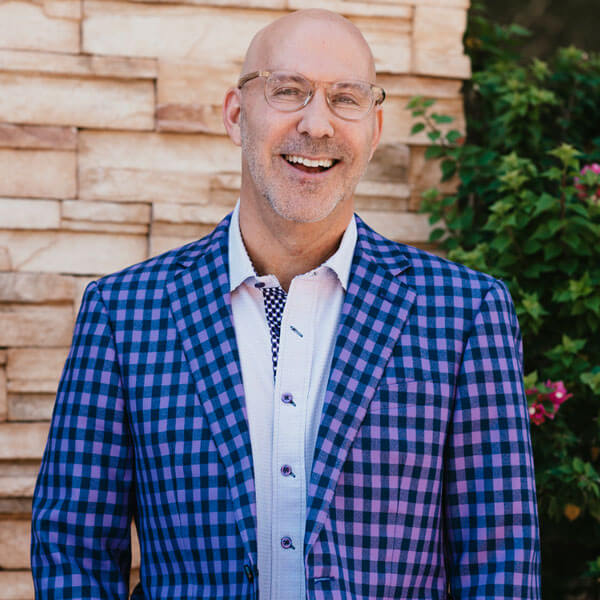
Louis J. Silberman is the CEO and Co-Founder of National Laser Institute, the pioneer of the medical aesthetics training industry and the largest educator in the country. NLI also operates one of the busiest medical spas in the country, seeing up to 3,000 clients per month. Louis Silberman is also an entrepreneur who has been named Ernest and Young’s EY Entrepreneur of the Year Semifinalist.