How Does Laser Tattoo Removal Work?
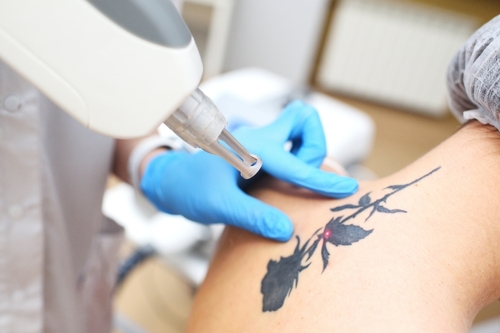
Laser tattoo removal uses a high-intensity light beam that breaks up the pigment of a tattoo. The laser emits short, intense pulses of light that pass through the upper skin layers and are absorbed by the pigment. The pigment breaks into smaller particles, which the body’s lymphatic system removes.
Four Questions About Laser Tattoo Removal
1. How many laser tattoo removal treatments are needed?
Removal is not a quick fix. Clients often need anywhere from 5 to 12 sessions for clear results depending on tattoo age, color, ink type and size; and may require up to 30 sessions for full removal according to Scripps.
Green and blue ink are the hardest to fade, while blacks and reds are easier. Complete removal can’t be guaranteed, but a tattoo can often be faded to the point that it’s not noticeable. Each session averages 5 to 15 minutes, depending on tattoo size, so technicians can treat several clients a day.
2. Does getting a tattoo removed hurt?
Some discomfort is expected, and it is often compared to a rubber band snap. Topical numbing creams can help.
3. Does laser tattoo removal cause scarring?
Older methods like dermabrasion and excision carried a scarring risk. Modern laser removal carries minimal scarring risk, but poor circulation, immune deficiencies, certain medications, and poor aftercare can raise it.
4. What about aftercare for laser tattoo removal?
Guidelines include:
- Keep the area clean and dry, cleaning gently and patting dry.
- Expect blistering, which indicates healing and ink removal.
- Don’t pick scabs or scrape the skin, and avoid shaving until healed.
- Use a cool compress for up to 24 hours. Tylenol is acceptable, but aspirin should be avoided.
- Use SPF 25+ sunblock on the area for three months, and avoid makeup or creams unless recommended.
What Affects Success?
Several factors determine tattoo removal success:
- Tattoo size: large tattoos may be treated in stages.
- Ink color: darker colors are easiest to remove.
- Ink type: some inks absorb lasers poorly.
- The artist’s skill: consistent ink depth helps.
Which Lasers Remove Tattoo Ink?
Technicians use cosmetic lasers to remove tattoo ink, and the Q-switched Nd:YAG is the most common device. Different Q-switched lasers target different ink colors. Red ink responds to green pulses, green ink to red pulses, and black ink to the 1064 nm wavelength.
- Q-switched ruby laser: most responsive to blue and green ink.
- Q-switched alexandrite laser: most responsive to blue, black, and green ink.
- Q-switched Nd:YAG laser: better for darker skin because it reduces melanin absorption. Its color range is limited to black and dark blue, though it also handles reds, oranges, and yellows better.

 Why Get Into The Laser Tattoo Removal Industry?
Tattoo removal is a growing niche in the medical aesthetics industry. According to Fortune Business Insights, the tattoo removal industry was valued at nearly 1.3 billion in 2025 and it is anticipated to grow from nearly 1.5 billion dollars in 2026 to almost 4.9 billion dollars by 2034.
Laser tattoo removal has become a major treatment over the last decade, and if you want to work in the industry, the tattoo removal training course at National Laser Institute is a great place to start.
National Laser Institute has trained professionals for over 20 years and is described as the gold standard in cosmetic laser education.
Who Can Perform Tattoo Removal?
Cosmetic laser technicians, medical professionals, estheticians, cosmetologists and others who are properly trained and certified can perform tattoo removal. Certification requires attending a cosmetic laser school.
What You’ll Learn A National Laser Institute
National Laser Institute’s laser tattoo removal training covers:
- Laser physics and skin interaction
- Laser safety and client consultation
- Wavelength and settings
- The Fitzpatrick scale and laser biophysics
- Pre- and post-treatment care
- Laser operations
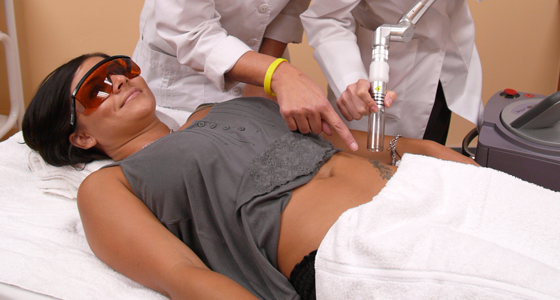
- Hands-on practice with real clients in a medical spa setting
- Business and marketing strategies
 Why Choose National Laser Institute?
National Laser Institute has produced over 20,000 graduates, instructors are described as top industry experts, students get hands-on practice with FDA-cleared devices, and students also receive business training. Courses run about two weeks, split between classroom and hands-on clinical training.
Explore the cosmetic laser course options and our Just Tattoo Removal course today.
Career Potential
Treatments range from $200 to $500 per session, and multiple sessions are typically needed per tattoo, so the earning potential can be what you make it.
Get Started Today
Get started with us and fill out our form today or to learn more call 800-982-6817.

About the Author
Louis J. Silberman is the CEO and Co-Founder of National Laser Institute, the pioneer of the medical aesthetics training industry and the largest educator in the country. NLI also operates one of the busiest medical spas in the country, seeing up to 3,000 clients per month. Louis Silberman is also an entrepreneur who has been named Ernest and Young’s EY Entrepreneur of the Year Semifinalist.