Addressing Botox Myths And Misconceptions
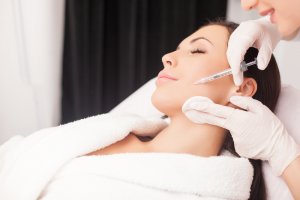 Botox has quickly become the No. 1 non-surgical treatment, with more than 7 million procedures performed in a single year. Despite its popularity, misconceptions still swirl around Botox — both about the treatment itself and about what it actually takes to become a certified injector. Addressing Botox myths can help nurses, physicians, and other medical professionals better understand the treatment and what proper Botox training involves.
6 Botox Myths About Treatments
Addressing Botox myths starts with understanding what the treatment can and cannot do. Here are six common misconceptions about Botox treatments.
Botox Myth #1: Botox and dermal fillers are the same thing. They aren’t. Botox is a neurotoxin that relaxes facial muscles to reduce the creasing and wrinkling that naturally occurs with expression. Dermal fillers, on the other hand, plump areas that have lost significant volume, treating smile lines, lip, or cheeks. Cosmetic injectors typically use a combination of both to achieve the best results.
Botox Myth #2: Botox is permanent. Although the effects last a reasonable amount of time, they are not permanent. Clients need to schedule regular treatments if they want to keep dynamic wrinkles from reappearing. Botulinum toxin generally lasts between three and six months, depending on facial anatomy, dosage and the treated area.
Botox Myth #3: Facial wrinkles get worse if you stop using Botox. Not true. If a client stops getting injections, their wrinkles simply return to how they looked before treatment. The muscles gradually lose the relaxing effect of the Botox and resume their normal pattern of movement and expression — nothing is made worse by stopping.
Botox Myth #4: The best time for Botox is once fine lines actually appear. Increasingly, nurses and physicians are seeing younger clients request Botox as a preventative treatment rather than a corrective one. Botox use among adults aged 19 to 34 has climbed sharply over the past several years, and many medical professionals believe it’s easier to prevent deep-set lines from forming than to smooth them out later.
Botox Myth #5: Botox is just for wrinkles. Far from it as Botox is currently used to treat over 20 different medical conditions, with more applications under ongoing investigation. Many patients receive injections for migraines, since it helps reduce the muscle tension that places strain on the nervous system. It’s also used for hyperhidrosis or excessive sweating of the underarms, hands, or feet, relieving symptoms by essentially “turning off” sweating at the injection site.
Botox Myth #6: Botox is only for women. They don’t call it “Brotox” for nothing. Physicians and nurses have seen a steady rise in men coming in for treatment, many of them in their 30s — for some, Botox is used to soften facial features and appear more approachable. The American Society of Plastic Surgeons has reported a dramatic, ongoing increase in the number of men getting Botox over the past two decades.
5 Botox Misconceptions About Training
Addressing Botox myths isn’t limited to misconceptions about the treatment itself. There are also a few common misconceptions about what Botox training involves and who can become a cosmetic injector.
 Botox Misconception #1: Anyone can get Botox training. Laws vary from state to state regarding who is allowed to inject Botox and under what level of supervision, but because Botox is a controlled substance, injectors must be licensed medical professionals — physicians, nurse practitioners, physician’s assistants or registered nurses. Not just anyone can enroll and start injecting.
Botox Misconception #2: Practicing on fruit or mannequins are the only hands-on training available. While that may be true at some training institutions, at National Laser Institute, the clinical portion of Botox training means working in small groups with real, scheduled clients. Our full-time team of phone operators calls and books real clients specifically for students to train on, so you leave feeling comfortable and confident with your new skill set — not one that was only ever practiced on an orange.
Botox Misconception #3: The primary motivation for Botox training is money. While Botox training does offer major earning potential, it’s not just about the money. The most important part of injection training is learning to put patients’ needs first — perfecting their health and appearance while exercising sound ethical judgment about who is and isn’t a good candidate for treatment, based on medical history and emotional readiness alike. That duty supersedes financial considerations every time.
Botox Misconception #4: You don’t need an artistic eye to inject Botox. The most successful aesthetic medicine practitioners have mastered the ability to perform treatments with genuinely artistic judgment. Every patient is unique, with different genetic, environmental, and lifestyle factors to weigh — successful injectors understand beauty is in the eye of the beholder, and good training teaches you to treat each patient according to their individual concerns, helping them look refreshed and awake without it being obvious they’ve had “something done.”
Botox Misconception #5: It doesn’t matter where you get your Botox training. Diversity in expertise matters enormously. At National Laser Institute, you’ll learn from a diverse group of aesthetic industry leaders (successful plastic surgeons, dermatologists, aesthetic nurses, skincare consultants, and marketing veterans) each bringing five to twenty years of real-world experience. That breadth of perspective gives students an exceptional learning experience they simply won’t find everywhere.
By addressing Botox myths and misconceptions about training, aspiring cosmetic injectors can better understand the importance of comprehensive education, hands-on experience and proper medical training before incorporating Botox into their practice.
Botox Training At National Laser Institute
If you’re a physician, nurse, nurse practitioner (NP), or a physician assistant with a passion for the health and beauty industry, consider one of our comprehensive aesthetics training courses. You will learn a variety of cosmetic injectable treatments, including Botox, dermal fillers (Restylane and Juvéderm), Platelet-Rich Plasma (PRP), PDO threads, cosmetic lasers and more.
Our CE/CME training courses are divided into digital didactic and hands-on. In the classroom, you’ll learn proper injection technique, patient selection and more. The second half of the course is spent doing clinical hands-on training in a medical spa environment with scheduled clients, giving you genuine real-world experience as we are the only esthetics school in the country that spends millions of dollars every year to schedule real clients for students to work on.
National Laser Institute was the first to combine classroom instruction with one-on-one observation and hands-on Botox injection training. After training, you’ll feel comfortable and confident performing these cosmetic injectable treatments in any medical setting.
If you’re looking for a faster track, our Botox and Dermal Fillers weekend course is also available — all of our courses are highly customized to fit your individual schedule and goals.
To learn more about course options at National Laser Institute, fill out the form on our site or call 1-800-982-6817.
About the Author
Louis J. Silberman is the CEO and Co-Founder of National Laser Institute, the pioneer of the medical aesthetics training industry and the largest educator in the country. NLI also operates one of the busiest medical spas in the country, seeing up to 3,000 clients per month. Louis Silberman is also an entrepreneur who has been named Ernest and Young’s EY Entrepreneur of the Year Semifinalist.