Botox Training For Nurses

We say this on behalf of all of us: you’ve given your fair share of enemas. You’ve inserted enough catheters, cleaned enough vomit out of your hair, manually handled enough impactions and watched enough pressure ulcers ooze. As a nurse, you battle skin folds and screaming patients. Your scrubs are smattered with unidentifiable biohazards most of the time, and you leave work covered in skin flakes; wound care and all that seeps into your life. If any of this sounds somewhat familiar and you’re seeking a change of pace Botox training for nurses could be the next step in expanding your career. (Consequently, nursing burnout is real for a reason.)
It goes without saying that a career change is certainly in order.
Why Botox Training?
You’re not likely to be asked to dig anything out of anywhere as a cosmetic nurse. Similarly, you undoubtedly won’t be asked to obtain sputum or stool samples. The closest you’ll get to folds of any kind will be in the form of breakroom croissants.
Nope. Instead, you’ll become a certified practitioner working in a clean, relatively calm environment. Your pressed scrubs will stay fresh, and your sanity intact, as you go through the exciting motions of your new career. If you’re ready for a change of pace, Botox training for nurses may be the right choice for you. If you have worked one too many nights or been short-staffed one too many times in the hospital, you’ve come to the right place.
Botox training at medical aesthetician schools, like National Laser Institute, only take between 1-7 days, so nurses can be on their way to using new skill sets in a new environment or adding it to their current practice. Nurses also have the opportunity to earn CE/CME credits upon completion of their Botox injection course.
Where Can You Get Botox Training?
“Hi, I’m an RN looking into training for Botox. I was wondering what I needed to do in order to get trained. How long are training courses? Can I perform treatments on my own once I’m done with Botox training?”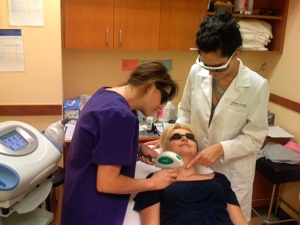
If you’ve found yourself asking this common question, know you are not alone. Tons of medical professionals have been interested in adding Botox training and treatments to their area of expertise. Before you provide Botox to clients, you need to become Botox certified, meaning you should attend an accredited course that offers hands-on training and certification, so you become confident and familiar with providing treatments. At National Laser Institute, you can complete your Botox certification course in as little as one day of training or opt for comprehensive injectable courses ranging from 2 to 12 days that also include dermal fillers, cosmetic laser treatments, sclerotherapy, BHRT, skin rejuvenation, and more.
What Are the Top Benefits of Botox Training for Nurses?
The top three benefits of Botox training for nurses are increased job security, increased earnings potential, and improved patient care.
Increased job security
Botox training equips you with skills for a treatment in high demand, helping you stay competitive in the job market.
Increased earnings potential.
Learning to administer Botox and other injectables lets you offer additional services, directly expanding your income opportunities.
Improved patient care.
Training teaches proper technique, potential risks and side effects, and how to assess a patient’s medical history to determine if Botox is appropriate — equipping you to provide the best possible care.
As a certified nurse injector, you are also able to set your own hours, choosing the days and times that work best for you and your family; which may include taking time off during the summer months if that fits your schedule better. There are no limits on shifts either, so you can work as little as one day a week or as much as you’d like, depending on how much you want to earn.
Just How Big Is The Botox Industry?
If you’ve been paying attention to the latest trends in health and beauty, you already know that the demand for cosmetic injections such as Botox has never been greater. Botulinum toxin type A (Botox) has come a long way since the FDA first approved it as a cosmetic treatment in 2002. Botox has remained the number 1 non-surgical cosmetic treatment in the U.S. for well over a decade, with more than 7 million Botox treatments performed in a single year alone, bringing in over $2.9 billion dollars. As a whole, the medical aesthetics industry is worth well over $16 billion dollars and continues to grow every year. And it isn’t just cosmetic: Botox can also be injected in specific head and neck sites to treat conditions like hyperhidrosis (excessive sweating of the hands, feet and armpits) and it has even been studied for treating overactive bladders.
Regardless of whether it is used for cosmetic purposes or medical ones, roughly 95% of patients who receive Botox injections report being very satisfied with the results.
Who Can Get Botox Training?
Not just anyone can administer highly regulated cosmetic injectables. The practice is reserved for licensed medical professionals who are required to take and pass Botox certification. Registered nurses, physicians, physician assistants and nurse practitioners are among those who are eligible for Botox training. Though the rules differ depending on where you live and work, it’s an industry standard that only medical professionals be allowed to dispense Botox and other cosmetic injectables. If you’re interested in the medical aesthetics industry but don’t have a medical background, cosmetic laser technician training is an alternate path worth exploring instead.
What Do Botox Nurses Do?
Botox nurses (also commonly called aesthetic nurses or cosmetic injectors) work to help their patients feel their best in a way different from their peers employed by hospitals and clinics. Instead of focusing on disease processes and illness, they specialize in cosmetic procedures — pairing their medical background with specialized training to administer injectables, laser treatments and other desired services.
 Aesthetic nurses are responsible for consultations with their patients: interviewing them, providing a medical screening prior to treatment and assessing their desired outcomes. They also examine the patient’s skin to assess problems and determine the best treatment, perform both pre- and post-operative care and handle the preparation and sterilization of instruments as well as the treatment suite. Beyond Botox and dermal fillers, aesthetic nurses also commonly enjoy performing laser skin resurfacing, chemical peels, Micro needling utilizing PRP, photofacials and more.
Hence, the lack of stress. Botox nurses don’t confront death and pain on a daily basis. In its place, they make their clients happier and boost their confidence with life-changing treatments. Can you imagine delivering smiles and relief instead of bad news? It may sound like an impossible dream, but it isn’t — the work of a cosmetic nurse is rewarding in so many ways. If you’re considering a transition into medical aesthetics, Botox training for nurses can be an important step toward expanding your skills and exploring this rewarding career path.
An Artistic Side To Cosmetic Nursing
Heather, a registered nurse eight years into her career (mostly spent in bedside hospital nursing and, more recently, infusion sales) took the two-day Botox and filler course at National Laser Institute’s Dallas campus and described leaving wanting more. She admitted feeling nervous going in, since the work involves people’s faces, but said the hands-on portion didn’t feel like work at all. Between Botox/Dysport and traditional fillers like Juvederm and Restylane, she found herself drawn slightly more toward filler work, describing it as more of an art, figuring out placement and what a patient would want based on what they came in requesting.
That artistic quality is a common thread among cosmetic nurses, who carefully study the intricacies of facial bone and tissue structure to pinpoint exactly what injectable is needed, how much to use and where to place it. Heather also noticed a difference many nurses report immediately: hospital patients are usually there because they have to be, while cosmetic patients choose to be there and are genuinely excited for treatment. If you enjoy artistic endeavors like painting, drawing or sculpting, you may find real satisfaction in this line of work.
Where Do Nurses Work After Botox Training?
Another great thing about becoming a cosmetic nurse is there are jobs aplenty. Botox nurses work in niche boutiques, medical spas, physicians’ offices, day spas, dermatologists’ offices, plastic surgeon offices, laser clinics and fitness facilities.
In addition to working for someone else, aesthetic injectors can open their own private suite and be their own boss as the world of medical aesthetics offers a lot of flexibility for whatever your work and home life requires.
Because these treatments are cosmetic and don’t involve insurance reimbursements, aesthetic injector salaries can range anywhere from $140,000 to $200,000 annually, depending on experience, location and whether you work part-time or full-time. Those who pursue their own practice can make significantly more.
Real Graduate Experiences
Graduates consistently describe the same fast, energizing path into this new career. One graduate recalled getting a job interview lined up within an hour of receiving her certificate, after a New York doctor called the school directly asking to hire one of its graduates — she had a second job offer secured within the same week, made entirely through persistence and calling local med spas herself. Others describe instructors as knowledgeable, articulate, and genuinely fun to learn from, working with a wide variety of laser and injectable equipment on diverse clientele that gave them real confidence heading into the job market.
Treatments You’ll Learn Beyond Botox
A comprehensive cosmetic injector education covers far more than Botox alone:
- Dermal fillers: Hyaluronic-acid-based injectables (Juvederm, Restylane, Perlane, Radiesse) that add volume and rejuvenate the skin, typically lasting 6 to 12 months, which means seeing clients again yearly or bi-annually.
- Platelet-Rich Plasma (PRP) injections: Using a client’s own blood, with platelets separated out and reinjected into the skin to produce a regenerative effect that improves texture, tone, and the appearance of scars and sun damage.
- PDO threads: Synthetic sutures inserted with hypodermic needles that create a support system beneath the skin for a lifted effect, needing touch-ups every four to six months.
- Spider vein reduction (sclerotherapy): An injection of a saline-based solution and medication that collapses visible spider veins.
Where Can Botox Be Injected?
There are three main areas of the face where Botox injections are most commonly used:
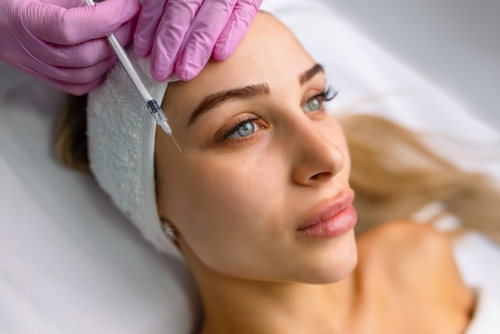
 Between the brows. Botox is injected directly into the muscles between the eyebrows to reduce the look of frown lines. Those two vertical lines create an “11” when your face is relaxed.
- The forehead. Botox can be applied to the forehead to reduce the appearance of a lined, furrowed face.
- Crow’s feet. Injected on the side of the eyes, Botox reduces the appearance of noticeable lines that can make you appear older.
How Difficult Is Botox Training?
The excellent news is that Botox training isn’t difficult. As a nurse, you’ve already passed state boards so you can certainly handle Botox training for nurses easily. Keep in mind, however, that you want to get the best training possible in order to be the best aesthetic nurse possible. A great school with a great reputation promises to teach you the latest methods and technology to be a successful practitioner in the field of medical aesthetics, and National Laser Institute is that school.
What You Will Learn During Your Botox Training
Students who take Botox training for nurses learn not only proper injection techniques but also the protocols associated with these treatments. You should expect to cover:
Facial anatomy
It’s important to know not only the proper names of different muscle groups but their location and function, since you’ll often reference an injection chart to explain treatments to patients.
How to check labels
While Allergan is the only manufacturer that produces Botox, other manufacturers make botulinum toxin products like Dysport and Xeomin. Each has its own minimum saline-to-botulism ratio that’s important to follow.
Proper dosage
Botox isn’t “one size fits all.” Dosage must be measured correctly for both the procedure and the individual patient — men typically have larger facial muscles than women and often require a higher dose.
Patient assessment
Not every patient is a good candidate for Botox. Some are more prone to bruising and other side effects, so you’ll learn the full consultation process, including the physical examination and interview.
Contraindications
Certain patients based on their medical history or other recent events may not be a good candidate.
The aging process
Why lines and folds occur, and how to better treat them.
Safety protocols
Risks and benefits of Botox and dermal filler treatments.
Sample Botox Training Course Agenda
Botox training courses can run anywhere from a weekend to two full weeks, depending on how comprehensive your training goals are. A Botox and dermal fillers agenda can include (based on Inner Circle Certification Program you select):
Icon And Lasers Inner Circle Certifications:
NINE certifications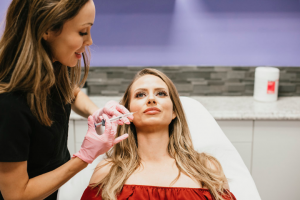
cme/ce credits earned
- Botox Certification
- Dermal Fillers Certification
- Facial Balancing
- Next Level Lips Certification
- PRP + PRF (Platelet Rich Plasma/Fibrin) Certification
- Sculptra Certification
- PDO Threads Certification
- Microneedling with PRP and Salmon
- Cosmetic Laser Training (2-day Program)
Icon Inner Circle Certification Also includes
- Everything in Icon Programs
- Monthly Business development Zoom
- Monthly Injection Q&A Zoom
- Sample Consent Forms
- Medical Director list
- Vendor Resource Guide
- Medical Director Sample Agreement
- Cannula and Facial Anatomy Video Education
Premium Inner Circle Certifications:
FOUR certifications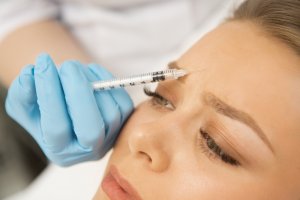
cme/ce credits earned
- Botox Certification
- Dermal Fillers Certification
- Facial Balancing
- Next Level Lips Certification
Icon Inner Circle Certification Also includes
- Everything in the VIP Programs
- Medical Director list
- Vendor Resource Guide
View a list of all of our comprehensive courses, as each varies and can expand on this same structure across multiple days, adding advanced injection technique, more hands-on clinical time and a dedicated marketing seminar to help you build your new practice.
For Physicians, Too
Botox training isn’t just for nurses looking for a full career change, it’s also a wonderful opportunity for physicians who want to expand an existing practice. Doctors can increase revenue by adding cash-based procedures like Botox and other cosmetic injectables or laser treatments, and expanding practices in turn require additional nursing staff. Many RNs take these same courses to broaden their skill set, add income on the side, or launch an entirely new full-time career as a cosmetic nurse.
Why National Laser Institute?
National Laser Institute was founded in 2004 and, in the years since, has emerged as the industry leader in medical aesthetic education and training. We were the first school to offer required laser training in Arizona, the same year the state first mandated it. National Laser Institute is approved by the Arizona Board for Private Post-Secondary Education, and we provide CE/CME credits through the Arizona Nurses Association and the American Academy of Family Physicians. We have also earned an A+ rating with the Better Business Bureau and are recognized by many as the “Harvard” of cosmetic laser and aesthetics schools.
Our continuing education courses are led by industry-leading medical professionals — dermatologists, plastic surgeons and seasoned aesthetic nurses with 7 to 20 years of experience, all of whom gladly share their “pearls” of wisdom with attendees. Classes stay small and intimate so instructors can spend real time with each student. Unlike schools where students practice hands-on training on each other, National Laser Institute spends millions of dollars every year to provide scheduled, real, paying clients for every student to work on, giving you genuine real-world experience in a luxury retail medical spa. You’ll even have the opportunity to receive treatments yourself as a student, so you understand the client experience from both sides.
Top reasons medical professionals choose Botox training:
- Growing popularity: Botox remains a billion-dollar industry that continues to grow every year
- Additional income: cosmetic injectors generate between $300 and $800 per Botox client
- Lunchtime treatments: Botox takes 15 to 40 minutes to administer, nicknamed “the lunchtime procedure”
- FDA-approved, so clients can feel confident in the treatment they’re receiving
- Training is quick, Botox and dermal filler training can be completed in as little as two to seven days
- Quick, visible results with minimal downtime for clients
- The chance to build long-term relationships, since Botox doesn’t last forever and clients return for maintenance
- Cash-based business with no insurance hassle
- Job opportunities are plentiful — medical spas, dermatology offices, physician’s offices, and your own private practice
- A better treatment option than wrinkle creams, which is an easy selling point for clients
Training Options To Fit Your Schedule
During our CE/CME Online Cosmetic Injections Course, you’ll receive live and interactive online classroom teaching and demonstrations from some of the most respected professionals in medical aesthetics. Expect to learn about Botox and Dysport, dermal fillers, advanced injection areas, PDO threads, Platelet-Rich Plasma (PRP), Kybella and sclerotherapy, earning CE/CME credits upon completion. After the didactic portion, you will be invited to practice hands-on skills at one of our nationwide spa locations, working closely with a skilled expert as you learn the latest injection techniques on actual NLI clients.
We understand you are busy, so we offer flexible course delivery: choose from online coursework (which still includes hands-on clinicals), in-person classes or a hybrid of the two. Whether you want to complete all of your training from home or join us in the med spa, we welcome you.
By the end of the course, you’ll be able to:
- Identify who is a candidate for Botox and facial fillers
- Understand the aesthetic consultation process
- Explain why lines and folds occur and how to treat them
- Explain the indications and contraindications of dermal fillers and Botox
- Demonstrate proper cosmetic injection technique for various anti-aging services
- Explain the anatomy and musculature of the face
- Understand the different types of cosmetic fillers, like Juvederm and Restylane
- Identify the risks and benefits of various anti-aging services
In Short
You are a registered nurse. As a result, you are already a member of one of the greatest of all professions. The world needs you, and we’re so glad to have you. If you’re ready to make a change, Botox training for nurses could be the next step toward a rewarding new career. Join the field of medical aesthetics and enjoy the bonuses and perks that come with leaving the hospital or clinic environment. As National Laser Institute CEO Louis Silberman puts it: “Finding your purpose isn’t only about making great money, it’s about so much more. It’s about tapping into your passions and chasing your dreams.”
We are ready to help you enroll. Call 800-982-6817 to talk to one of our knowledgeable academic advisors, or live chat with us now.
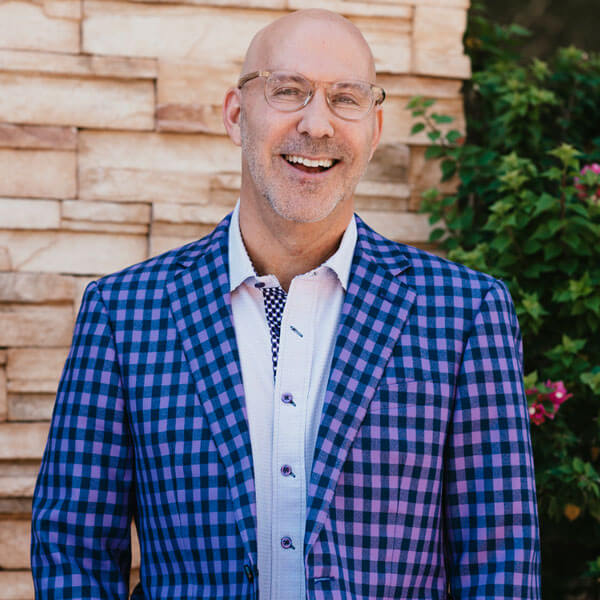
About the Author
Louis J. Silberman is the CEO and Co-Founder of National Laser Institute, the pioneer of the medical aesthetics training industry and the largest educator in the country. NLI also operates one of the busiest medical spas in the country, seeing up to 3,000 clients per month. Louis Silberman is also an entrepreneur who has been named Ernest and Young’s EY Entrepreneur of the Year Semifinalist.