“Brotox”: Botox For Men
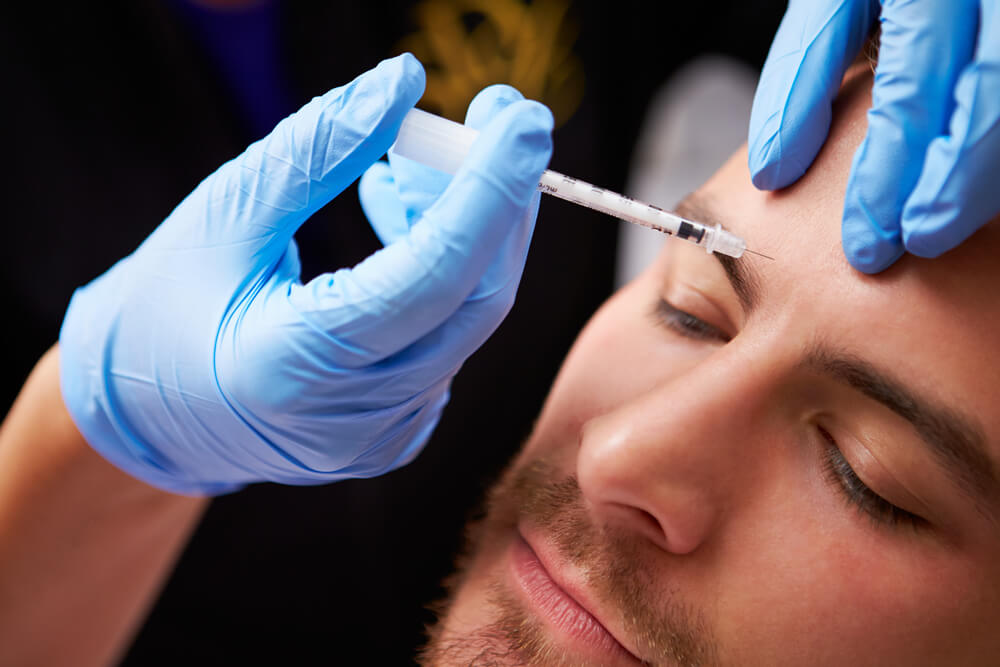
Let’s hear it for the boys! While non-surgical cosmetic procedures continue to rise rapidly across all age groups and both genders, you might be surprised to learn just how significantly they’re rising among men. What millions of women have known for over a decade — that Botox is a relatively painless, exceptionally efficient way to look and feel their best — millions of men are now discovering too, turning to non- and minimally-invasive procedures to look younger and stay competitive in the workplace. Botox for men, now popularly nicknamed “Brotox,” is a real and growing trend, and it’s here to stay.
The Numbers Behind The Trend
According to the American Society of Plastic Surgeons (ASPS), nearly 1.6 million men in the United States received Botox in 2024 versus 2023. That growth has continued in recent years. The ASPS states that in 2024 statistics, men received nearly 594,000 neuromodulator injections — including Botox, Dysport, Xeomin, Jeuveau and Daxxify — a 4.3% increase from 2023. Men also underwent more than 1.6 million minimally invasive cosmetic procedures in 2024, up 2.7% year over year. Male patients accounted for nearly 147,000 hyaluronic acid filler procedures and more than 106,000 non-HA filler procedures, demonstrating the growing demand for aesthetic injectables among men.
Public figures have played a role in normalizing the conversation. TV personalities Kelly Ripa and Savannah Guthrie have both spoken publicly about their own Botox use, and celebrities like Simon Cowell have openly discussed receiving the treatment. Allergan, the maker of Botox, even rolled out TV ad campaigns specifically targeting male consumers, featuring former NFL Hall of Famer and sports analyst Deion Sanders as a spokesperson — a clear signal that the company sees men as a serious, growing market.
Why Is Botox For Men Becoming So Popular?
 There’s no single national dataset on exactly why men choose to get treatment, but physicians report a steady uptick across a range of motivations. Selfies and social media are part of it — with smartphone cameras putting our own image in front of us nearly around the clock, it’s harder not to notice perceived imperfections, and celebrities’ growing openness about their own treatments has made it feel far less taboo than it once was. Career competitiveness is another factor: as people work later into life, staying sharp-looking at the office has become its own kind of professional edge. Some men in their 20s and 30s pursue preventative Botox to soften dynamic wrinkles before they set in, while others come in during a major life transition — a career change, a divorce or simply a new stage of life. Whatever the reason, Botox for men can help them look and feel their best as they enter a new chapter.
What Botox For Men Actually Treats
Botox Cosmetic is a nonsurgical, anti-aging treatment approved by the FDA in 2002 that lessens the appearance of facial wrinkles and creases from sun damage and age. It’s commonly used between the eyebrows (the glabella), across the forehead, and around the crow’s feet — and it’s a genuine “lunchtime procedure,” often taking as little as 15 minutes.
Physicians and nurses also commonly use Botox for men in ways that go beyond typical wrinkle-smoothing. Injecting the masseter muscle along the jawline can help slim the face and reduce dimpling of the chin — a popular request among men looking for a more defined jawline. Botox is also frequently used to treat hyperhidrosis, or excessive sweating; research has found an 82% to 87% decrease in sweat production in the underarms following treatment. It can even help correct a gummy smile with a low, precisely placed dose.
Beyond Botox: Other Treatments Men Are Trying
 Botox is often just the starting point. Dermal fillers like Juvéderm are increasingly used to balance a gentleman’s face from chiseled chin to jawline to fuller cheeks — results that can last up to two years with minimal to no downtime. Laser hair reduction, long popular with women, is also gaining ground among men who want to thin out noticeable back, chest, or arm hair without eliminating it entirely — a treatment many describe as a genuine confidence booster. For stubborn “love handles,” a range of non-surgical body contouring devices using fat freezing, fat melting, radiofrequency, or ultrasound technology now offer safer alternatives to traditional liposuction. And for a double chin, Kybella — an injectable form of deoxycholic acid, a molecule the body naturally uses to break down dietary fat — destroys targeted fat cells so they can no longer store fat, with the added benefit of firming and tightening the treated area in a way liposuction alone cannot.
Why This Matters For Medical Professionals
Botox results in essentially no downtime and carries a very low risk of adverse side effects, which is likely part of why so many men have been willing to try it. To meet the rising demand from this growing male client base, more medical professionals have taken an interest in Botox training. Medical aesthetic schools like National Laser Institute offer CME and CE courses that certify doctors, nurses, physicians, and other medical professionals who can safely administer Botox and other cosmetic treatments — with certification achievable in as little as one full weekend of hands-on training.
Botox Training At National Laser Institute
If you’re a physician, nurse, or medical professional looking to grow your service menu to meet this rising demand, consider Botox training at National Laser Institute. Our CE/CME training courses can be completed in as little as a weekend or up to two full weeks, combining classroom education with clinical hands-on training for the ultimate learning experience.
The didactic portion of the course teaches you everything you need to know about the various types of neurotoxins and fillers, the aging process, indications for treatment and safety protocols. Clinicals are spent in a real medical spa environment, where you’ll observe comprehensive Botox and filler demonstrations no more than a foot away from the treatment bed, then administer these cosmetic treatments yourself on real, paying clients.
By the end of a Botox and dermal fillers training course at National Laser Institute, you’ll feel comfortable and confident performing a variety of cosmetic treatments, including Botox, dermal fillers (Restylane and Juvéderm), Platelet-Rich Plasma (PRP), PDO threads and more.
For more information on National Laser Institute’s continuing education courses, fill out the form on our site or give us a call at 1-800-982-6817.
About the Author
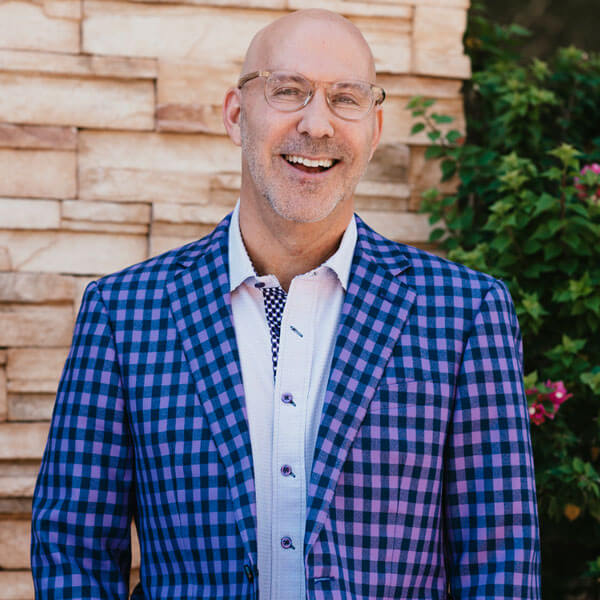
Louis J. Silberman is the CEO and Co-Founder of National Laser Institute, the pioneer of the medical aesthetics training industry and the largest educator in the country. NLI also operates one of the busiest medical spas in the country, seeing up to 3,000 clients per month. Louis Silberman is also an entrepreneur who has been named Ernest and Young’s EY Entrepreneur of the Year Semifinalist.