11 Ways Botox And Dermal Filler Training Can Boost Your Bottom Line
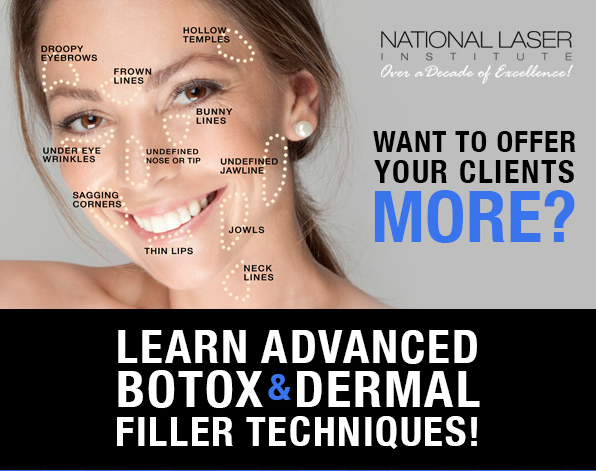
Your patients are looking for an experienced, well-trained injector to solve common aging concerns — frown lines, hollow temples, under-eye wrinkles, bunny lines, smile lines, crows feet, jawline, sagging mouth corners, jowls, thin lips and vertical neck lines. With over $16 billion spent on cosmetic treatments in a recent year and minimally invasive treatments increasing 180% between 2000 and 2016 — Botox alone up 797%, soft tissue fillers up 298%, and laser skin resurfacing up 243% — it’s clear why so many physicians, nurses and medical professionals building an aesthetic business are seeking additional training to work and grow these additional opportunities. Adding injectable services can expand your treatment menu, help you retain more patients in-house and create new sources of recurring revenue. Here are 11 ways Botox and dermal filler training can boost your bottom line.
11 Client Concerns You Can Solve
- Droopy eyebrows. The Botox Brow Lift instantly solves this by injecting into the crow’s feet area to heighten the tail of the brow — done more superficially than other facial areas, and best left to an expert injector. Offering treatments like this can give existing patients another reason to become returning customers or clients, rather than seek specialized services elsewhere.
- Frown lines. Botox softens frown lines by immobilizing the glabella muscles, weakening their ability to contract for several months. Because frown-line treatment can be a common entry point for Botox patients, it can also create opportunities to introduce patients to additional aesthetic services over time.
- Hollow temples. Replenishing lost volume here is one of the most effective ways to help patients look younger — an area many patients don’t realize can be treated, though demand is rising as it becomes more widely known. Juvéderm is an excellent option depending on the volume deficit. Expanding into less commonly requested treatment areas can further differentiate your practice and broaden the services available to existing filler patients.
- Under-eye wrinkles. A very small dose of Restylane injected just beneath the lower lash line corrects lower lid wrinkles for patients who want them gone.
- Bunny lines. These small creases across the nose form from repeated expression; Botox weakens the muscles responsible and is the best option to treat them. Small treatment areas can also work well as complementary services for established Botox patients, creating additional revenue opportunities without requiring an entirely new patient.
- Crows Feet and Smile Lines. Crows feet and smile lines are common signs of aging that develop from repeated facial movements and gradual loss of skin elasticity. Botox and dermal fillers can help soften the appearance of these lines, creating a smoother, more youthful-looking appearance.
- Undefined jawline. Facial fillers like Juvéderm and Restylane, intended for deeper injection, can define or reshape a jawline as desired. Jawline treatments also expand the potential applications of your filler service line, helping your practice serve a wider range of aesthetic goals.
- Sagging mouth corners. Fillers such as Restylane and Juvéderm Ultra Plus soften and fill the lines created by sagging mouth corners.
- Jowls. Voluma adds lost mid-face volume, creating fullness in the cheeks and a lifting effect on the lower face, while other fillers like Juvéderm or Restylane can camouflage sagging skin along the jowls. Having multiple options for concerns like jowls can give your practice an opportunity to build a more comprehensive treatment plan around each patient’s needs.
- Thin lips. Hyaluronic acid fillers like Juvéderm or Restylane work well for patients wanting fuller, more pronounced lips. Lip treatments are a great way to introduce new patients to your practice and provide an opportunity to build long-term relationships through other aesthetic services.
- Vertical neck lines. Botox softens vertical platysmal bands and can prevent more from forming if maintained roughly every three months. Treatments that require ongoing maintenance or further treatments can contribute to repeat visits and a more predictable stream of aesthetic business that can add to your revenue.
Unconventional Ways To Boost Revenue
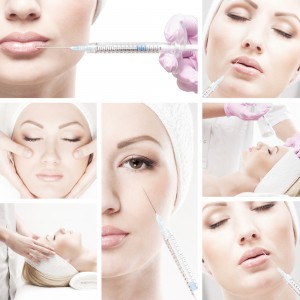 Beyond the traditional treatment areas, a few unconventional Botox modalities can add real revenue as excellent add-ons for your aesthetic business and existing clients:
- The Botox Lip Pop relaxes the muscle above the lip, causing it to turn out slightly for a fuller appearance — typically just one to two units per side. This can be a great complementary treatment, as it can be offered to various Botox patients looking for subtle enhancements.
- Gummy smile correction injects a low dose of Botox into the Levator Labii muscle near the nostril-cheek junction, lowering the upper lip to cover the gums without surgery.
- Lip lift for downturned mouth corners targets the Depressor Anguli Oris (DAO) muscle at the marionette lines, lifting and softening the lower face for patients whose mouth corners pull downward.
Patients typically see results from these mouth-area treatments within one to two weeks, often faster than other areas — making them excellent additions for regular Botox clients looking for a little more.
Growing Your Existing Practice
If you’re a doctor already referring clients elsewhere for Botox, consider an in-house audit of those referrals — every client sent away for treatment is revenue leaving your aesthetic business. Botox training lets you keep that business in-house, creating supplemental income without putting your existing practice on hold.
Adding a new service to your aesthetic business more broadly comes down to three things:
- Ask and listen: consider your client database, whether new treatments complement your existing services, and how you’ll differentiate from local competition
- Seek training: from a reputable school offering both classroom education and real hands-on clinical practice
- Market yourself: once trained, market consistently, since a new skill only pays off if clients know it’s available. The goal isn’t simply to add another procedure to your menu, but to add a service which fits and caters to your existing patients while creating sustainable growth opportunities for your business.
The Financial Case
Repeat treatments matter more than any single visit. Botox and most other cosmetic injectables need to be redone every few months for the best results, which means every new client becomes a built-in, recurring source of income — and many go on to try additional treatments beyond their first, compounding that value further. This can make injectables particularly attractive as a growth opportunity for an established aesthetic business.
The numbers back this up. According to the American Society of Plastic Surgeons, average Botox treatment costs in Arizona alone run $230 to $550. Because these are cash-based cosmetic procedures, there’s no insurance middleman — 100% of what you charge goes straight into your pocket, and a quick, roughly 30-minute treatment time means more clients seen per day. For practices that can efficiently incorporate injectables into their existing business, this creates an opportunity to generate additional revenue without building an entirely separate business model. Fortune Business Insights projects the global botulinum toxin market to grow from $3.41 billion in 2021 to $5.68 billion by 2028, and the medical aesthetics industry as a whole is expected to be worth $22.2 billion by 2025. The Bureau of Labor Statistics projects a 29% job outlook for skin care specialists through 2030 — far faster than the national average — with roughly 10,100 openings expected over the decade.
As one industry physician has observed, more doctors are adding cash-based cosmetic services partly because it means stepping away from the frustrations of managed care and insurance reimbursement — chasing a check is no longer part of the job. Of course, the motivation shouldn’t be money alone; every practitioner’s duty is still to put their patients’ best interests first.
Flexibility, Too
Beyond the financial case, many nurses in particular pursue Botox training simply for the change of pace it offers — lower stress, more flexible hours, and the ability to build supplemental income around their existing schedule and responsibilities, all while still making a meaningful difference in patients’ lives. Oftentimes, nurses venture off to begin their own cosmetic medicine to better their careers. For medical professionals who already have an established patient/client base or clinical practice, this flexibility can make aesthetic training a practical way to develop an additional revenue stream without completely changing their existing career path.
Training At National Laser Institute
At National Laser Institute, we train medical professionals from around the world to perform Botox and dermal filler injections with a light touch, proportion and symmetry for natural-looking results. Our injectables courses give you invaluable expertise in Botox and dermal filler training, learning how to inject Botox/Dysport, dermal fillers and Botox/fillers to create the results your patients want. Shorter and longer formats are also available — from a 2-day weekend Botox and dermal filler course up to a comprehensive 10-day program covering everything from Botox to skin rejuvenation to chemical peels.
We’re also the only medical esthetics school in the country that provides you with a dedicated marketing seminar on how to grow your aesthetic business as an owner, employee or independent contractor — our Founder and CEO, Louis Silberman, who has been featured in Entrepreneur Magazine, and was a semi-finalist in the Ernest and Young entrepreneur contest..
National Laser Institute keeps class sizes small, with instructors who work closely with each attendee to ensure real understanding and retention. We invite you to check out the thousands of reviews from previous attendees, including physicians like Dr. Ryan Krch, who took several of our CE/CME courses and shared his training experience afterward.
If you would like to boost your aesthetic business with Botox and dermal fillers, we invite you to National Laser Institute. To find out how you can register, please call 800-982-6817 or fill out the form on our site, and one of our Course Counselors will be happy to assist you.
About the Author
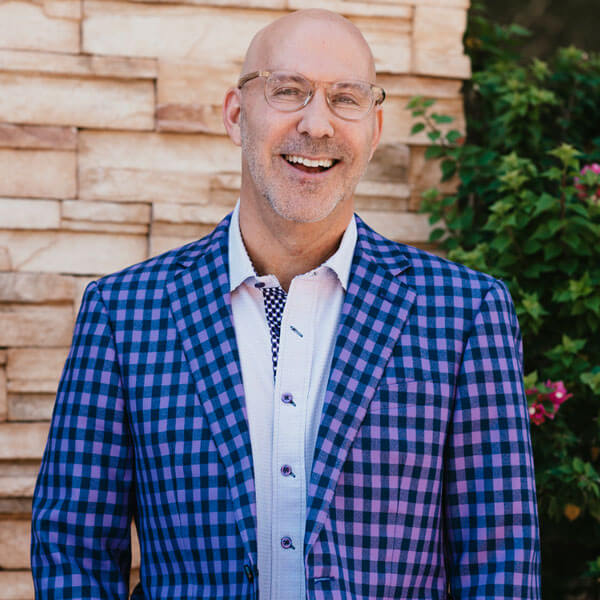
Louis J. Silberman is the CEO and Co-Founder of National Laser Institute, the pioneer of the medical aesthetics training industry and the largest educator in the country. NLI also operates one of the busiest medical spas in the country, seeing up to 3,000 clients per month. Louis Silberman is also an entrepreneur who has been named Ernest and Young’s EY Entrepreneur of the Year Semifinalist.