Botox Injection Technique
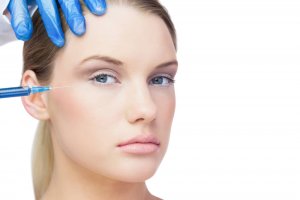 Are you a medical professional working in the healthcare field whose work has started to feel less gratifying and more like a chore? Do you want to exit the workforce quickly or keep your current job and add something new and exciting to the mix? You may be experiencing burnout — a type of exhaustion characterized by intense periods of prolonged physical, emotional and mental stress that keeps you from feeling productive. If you still want to stay in the medical field but need a change, medical aesthetics training might be exactly what you need. Botox is becoming more and more ubiquitous in the aesthetic marketplace — procedures have increased in the U.S. since the COVID-19 pandemic; so perhaps now is a good time to assess what you’re doing to differentiate yourself as a cosmetic injector. Learning proper Botox injection technique, including injection placement, facial anatomy and how to approach different treatment areas, is an important part of becoming a skilled cosmetic injector. Learn how to perfect your Botox injection technique at National Laser Institute.
What Is An Aesthetic Injector?
An aesthetic injector is a medical professional who has taken the necessary steps to perform medical aesthetic procedures, including Botox injections, dermal filler injections, and advanced laser technologies. You can become an aesthetic injector if you are a nurse, Registered Nurse, Physician, Nurse Practitioner, Physician’s Assistant, Dentist or Plastic Surgeon. Taking the leap into medical aesthetics can help improve unmanageable workloads, the pressure of deadlines, and the overall day-to-day responsibilities that come with traditional healthcare work.
Popular Botox Injection Sites and Technique
Botox is a cosmetic injectable that temporarily relaxes the muscles at the sites where it’s injected. Common treatment areas include:
Forehead Lines:
Botox is injected to smooth both horizontal and vertical lines by working with the muscles that create them. The proper Botox injection technique in this area requires a careful assessment of muscle movement and precise injection placement.
Crow’s Feet:
Also known as lateral canthal lines, these are the lines that form around the outer corners of the eyes. Perfecting your Botox injection technique here helps clients look noticeably younger while maintaining a natural appearance around the eyes.
Dimpled Chin:
This refers to the “pits” that form when the mentalis muscle contracts too much, often involuntarily. The proper Botox injection technique and placement here helps relax the muscle and reduce this dimpled appearance.
Elevens:
This site refers to the two vertical lines that form between the eyebrows when frowning. The proper Botox injection technique in this area focuses on precise placement to target the muscles responsible for creating these lines.

 What Is Spock Brow And How To Avoid It
Have you ever looked at someone’s face and thought their eyebrows resembled Dr. Spock from Star Trek? Spock brow is the term given to eyebrows that upturn sharply as an unwanted consequence of Botox injections. While brow lifts can be useful for facial rejuvenation, exaggerated eyebrows look unnatural and out of place.
Before injecting, medical professionals must have a thorough understanding of facial anatomy and how muscles interact with each treatment modality. Brow position results from the upward force of the elevator muscles and the downward pull of the depressor muscles — when these muscle groups fall out of balance, the brow can appear abnormal. The Spock brow typically occurs from overtreating the depressors and/or undertreating the elevators in the outer half of the forehead, a contraindication that tends to happen more with certain eyebrow shapes and clients who are very expressive with their eyebrows.
Injectors can avoid the Spock brow look by balancing the forces between elevators and depressors, typically by placing a small amount of Botox in the outer forehead. If a client does end up with raised eyebrows, proper training teaches the corrective measures to use — an upturned eyebrow is typically corrected during a follow-up appointment a few weeks after the initial treatment.
Injection Pearls For Beautiful, Natural Results
Not all Botox injectors are equal. Variations in artistic ability, training level and knowledge of facial anatomy and clinical skills create disparate results — the skill required to create pleasing, natural, youthful expressions starts not only with knowledge of facial anatomy but also with an artistic eye. Here are a few helpful Botox injection techniques and considerations to keep in mind while you’re gaining experience:
- Triple-check your Botox labels. There are a few manufacturers of botulinum toxin, each with its own minimum saline-to-botulism ratio to follow. Since your future practice may stock products from more than one manufacturer, always confirm exactly which product you’re using before you begin the prep process.
- Details, details, details. Make sure the alcohol used to sterilize the cap has fully evaporated before preparing your Botox injection serum, and gather everything you need before your patient arrives.Proper preparation and attention to detail are important parts of maintaining a consistent injection technique.
- Dosage matters. Botox isn’t one-size-fits-all. Every client is different, and dosage should be measured accordingly — gender matters too, since men typically have larger facial muscles and require a higher dose.
- Study relevant facial anatomy. Learn how the skin, muscles, bones and subcutaneous fat interact with one another, both at rest and during animation. A strong understanding of facial anatomy is essential for developing precise Botox injection techniques and achieving natural-looking results.
- Understand danger zones. Know the emergency treatments for intravascular injection and the anatomical areas that carry higher risk.
- Start with easier procedures and build up. Injecting the nasolabial fold, for example, is far easier to master than a tear trough — progress toward more advanced sites as your skill grows.
- Keep training on new trends to continue mastering your Botox injection technique over the course of your career. Ongoing education can help injectors stay current with evolving techniques, treatment approaches and best practices.
National Laser Institute’s Injectable Courses
You’ll learn a variety of important skills in National Laser Institute’s CE/CME courses. You’ll be trained on safety protocols for different types of cosmetic injections, learn in-depth what causes wrinkles to form and how to treat them, and study proper injection sites and techniques. You’ll also learn how to conduct a consultation and understand the benefits and risks of different cosmetic injections.
The first half of each course is spent in the classroom, where you’ll learn facial anatomy, contraindications, and injection technique — including how to avoid complications like the Spock brow. You’ll spend the remaining time in a medical spa environment receiving hands-on clinical training, watching comprehensive demonstrations, and treating scheduled clients to gain real-world experience. If you’re looking for advanced injection techniques, our advanced courses will teach you how cosmetic injections can work together to produce successful results, covering multiple injection sites like nose augmentation, secondary smile lines, and hand rejuvenation.
By the end of training, you’ll feel comfortable and confident performing a variety of treatments, including Botox, dermal fillers (Restylane and Juvéderm) and Platelet-Rich Plasma (PRP) Biostimulators, PDO thread and cosmetic lasers. With over two decades of excellence, National Laser Institute has taught countless physicians, nurses, and medical professionals how to become part of the $16 billion medical aesthetics industry.
National Laser Institute’s courses are held by leading dermatologists, cosmetic surgeons, and industry physicians. Students train on multiple industry-leading technologies in a real, luxury medspa environment, and our courses are approved for CE/CME credits for physicians and CE credits for nurses. We invite you to check out our reviews from our many graduates, who took several of our CE/CME courses and implemented what he learned directly in his own practice.
To learn more about mastering your Botox injection technique, click here to contact us today, or call 800-982-6817.
About the Author
Louis J. Silberman is the CEO and Co-Founder of National Laser Institute, the pioneer of the medical aesthetics training industry and the largest educator in the country. NLI also operates one of the busiest medical spas in the country, seeing up to 3,000 clients per month. Louis Silberman is also an entrepreneur who has been named Ernest and Young’s EY Entrepreneur of the Year Semifinalist.