Botox Training
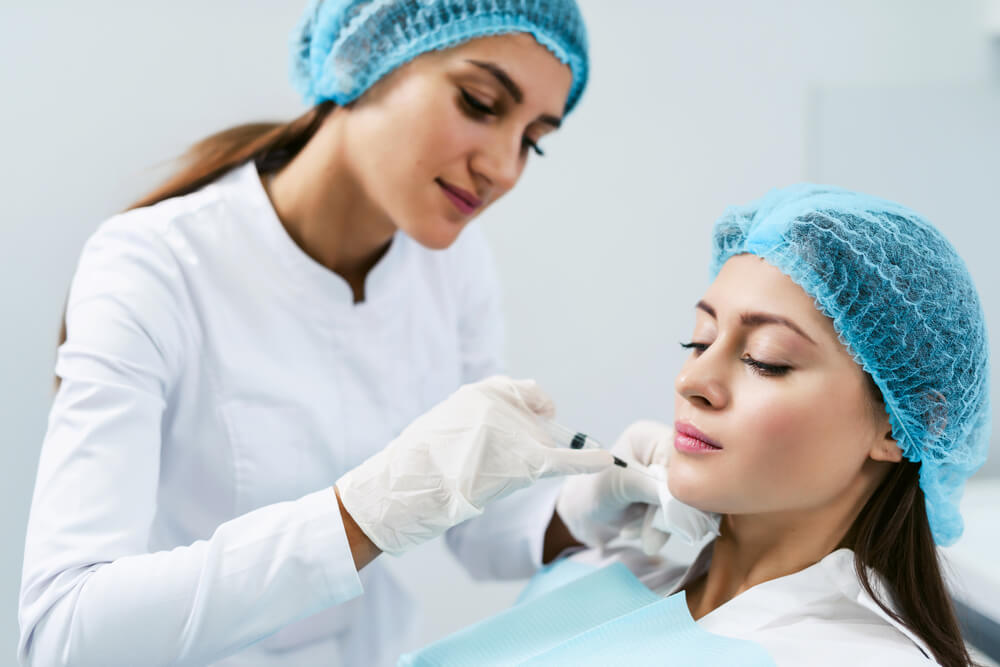 Botox has remained the #1 non-surgical cosmetic treatment in the U.S. for well over a decade, with more than 7 million treatments performed in a single recent year alone, bringing in over $2.9 billion revenue. The medical aesthetics industry as a whole is worth well over $16 billion and continues to grow every year. Clients don’t have to visit a large hospital system to get this in-demand treatment anymore, either — Botox is now performed in medical spas, dermatology clinics, private practices and wellness facilities across the country. If you’re looking to enter this growing highly profitable field, Botox training can genuinely be a worthwhile investment in your career.
Just How Big Is The Botox Industry?
Botulinum toxin type A (Botox) has come a long way since the FDA first approved it as a cosmetic treatment in 2002. It isn’t just cosmetic, either: Botox can also be injected in specific head and neck sites for neurologists to treat migraines and other cosmetic professionals us it to look into conditions like hyperhidrosis (excessive sweating of the hands, feet, and armpits) and it has even been studied for treating overactive bladders. Regardless of whether it’s used for cosmetic purposes or medical ones, roughly 95% of patients who receive Botox injections report being very satisfied with the results.
Who Can Get Botox Training?
 Not just anyone can administer highly regulated cosmetic injectables. The practice is reserved for licensed medical professionals, like nurses, nurse practitioners, physician assistants, physicians and dentists, who are required to take and pass Botox certification, and specific eligibility rules vary depending on where you live and work. If you’re interested in the medical aesthetics industry but are not one of the above stated medical professionals yet certified to administer cosmetic injectables, cosmetic laser technician training is an alternate path worth exploring instead.
What Does A Cosmetic Injector Do?
Cosmetic injectors work to help their clients feel their best in a way that’s different from a traditional clinical role. The day-to-day centers on consultation and care: interviewing new clients, providing a medical screening prior to treatment, examining the client’s skin to assess concerns, and performing pre- and post-treatment care, along with preparation and sterilization of instruments and the treatment suite. Beyond Botox and dermal fillers, injectors are commonly also responsible for performing PRP (Platelet Rich Plasma), Biostimulators (like Sculptra and Radius), PDO threads, microneedling (with PRP or salmon DA), cosmetic lasers (CO2 laser skin rejuvenation), dermabrasion, CoolSculpting, laser tattoo removal, photofacials and more.
The work itself tends to be lower stress than many other roles in the medical field. Rather than confronting difficult or urgent health situations daily, certified injectors get to make their clients happier and boost their confidence with life-changing treatments which is a genuinely different and rewarding kind of impact.
Where Do Cosmetic Injectors Work?
Another great thing about this line of work is that jobs are plentiful, and since medical aesthetics offer a lot of flexibility it can open a world of new possibilities. Cosmetic injectors work in niche boutiques, medical spas, physicians’ offices, day spas, dermatology offices, laser clinics, plastic surgeon offices and fitness facilities; some even open their own private suite and become their own boss.
Because these treatments are cosmetic and don’t involve insurance reimbursements, earning potential in this field can be considerable, particularly for those who build a loyal client base or eventually open their own practice.
Where Can Botox Be Injected?
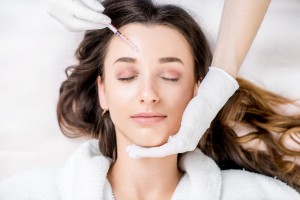
There are three main areas of the face where Botox injections are most commonly used:
 Between The Brows
Botox is injected directly into the muscles between the eyebrows to reduce the look of frown lines — those two vertical lines that create an “11” when the face is relaxed.
The Forehead
Botox can be applied to the forehead to reduce the appearance of a lined, furrowed face.
Crow’s Feet
Injected on the side of the eyes, Botox reduces the appearance of noticeable lines that can make someone appear older.
What You’ll Learn During Botox Training
Comprehensive Botox training covers not only proper injection technique but also the protocols associated with these treatments. You should expect to cover:
Facial Anatomy
The names, locations and functions of different muscle groups, since you’ll often reference an injection chart to explain treatments to clients.
How To Check Labels
Different manufacturers (Allergan, and others producing Dysport and Xeomin) have their own minimum saline-to-botulism ratios that must be followed.
Proper Dosage
Botox isn’t one-size-fits-all, since facial muscle size and structure vary from person to person.
Patient Assessment
The full consultation process, including physical exams and interviews, since not every client is a good candidate.
Indications And Contraindications
For Botox and dermal fillers like Juvederm, Restylane and Voluma.
The Aging Process
Why lines and folds occur, and how to better treat them.
Safety Protocols
The risks and benefits of Botox and dermal filler treatments.
 Continuing Your Botox Training
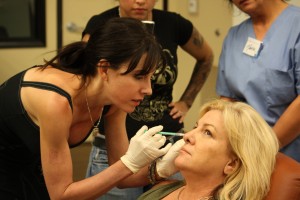
those with prior injection experience, continued Botox training can expand your knowledge and use of Botox to increase the revenue of your practice. With over 20 years of excellence, National Laser Institute provides advanced Botox training where you’ll learn how to inject non-traditional areas for facial contouring and aesthetic enhancement, drastically improving the appearance of aging clients.
Continuing your Botox education go beyond the nasolabial folds, lip augmentation and marionette lines, teaching how to combine Botox with dermal fillers for treatments like cheek augmentation, scar revisions, oral commissure correction and neck band softening, using several specific cosmetic injection techniques:
Threading
The full length of the needle is inserted into the middle of the wrinkle to create a channel; as the needle is slowly drawn back, “threads” are deposited along the wrinkle or fold.
Cross-hatching
A series of parallel linear lines followed by perpendicular injections, useful for filling the oral commissures or larger areas requiring correction.
Feathering
Multiple passes of the needle create a layered, three-dimensional contour.
Continuing your Botox education will also cover injection sites like the glabella, lateral brow, temporal volumization, nose augmentation and hand rejuvenation; plus popular off-label techniques such as the “lip pop” for fuller lips, Botox for an eyebrow arch, and Botox for platysmal neck bands.
Sample Course Agenda
Courses can run anywhere from a weekend to two full weeks, depending on how comprehensive your training goals are. A typical weekend session combines Botox and dermal filler education with hands-on clinical training. The weekend begins with an in-depth look at patient selection, the aging process, and the history and science of Botox, followed by a lunch seminar focused on incorporating injectables into your practice. The session then moves into hands-on training covering upper- and lower-face injection techniques. Dermal filler education includes an overview of filler types, indications and contraindications, along with a marketing seminar and hands-on training focused on treating folds, wrinkles, and lip enhancement. Longer, more comprehensive courses build on this weekend format by adding additional injection techniques, treatment areas, and hands-on clinical experience.
Why National Laser Institute?
National Laser Institute was founded in 2004 and, in the years since, has emerged as an industry leader in medical aesthetic education and training. We provide CE/CME credits through the Arizona Nurses Association and the American Academy of Family Physicians. We’ve also earned an A+ rating with the Better Business Bureau and are recognized by many as the “Harvard” of cosmetic laser and aesthetics schools.
Our continuing education courses are led by industry-leading professionals with seven to 20 years of real world experience. Classes stay small and intimate so instructors can spend more time with each student. Unlike schools where students practice hands-on training on each other, National Laser Institute spends millions of dollars every year to provide scheduled, real paying clients for every student to work on, giving you genuine real-world experience in a luxury retail medical spa. You’ll even have the opportunity to receive treatments yourself as a student, so you understand the client experience from both sides.
Top Reasons People Choose Botox Training:
- Growing popularity: Botox remains a billion-dollar industry that continues to grow every year
- Additional income: cosmetic injectors generate between $300 and $800 per Botox client
- Lunchtime treatments: Botox takes 15 to 40 minutes to administer, nicknamed “the lunchtime procedure”
- FDA-approved: Clients can feel confident and safe in the treatment they’re receiving
- Training is quick: Botox and dermal filler training can be completed in as little as two to seven days
- Quick, visible results with minimal downtime for clients
- The chance to build long-term relationships, since Botox doesn’t last forever and clients return for maintenance
- Cash-based business with no insurance hassle
- Job opportunities are plentiful: medical spas, dermatology offices, physicians’ offices, and your own private practice
- A better treatment option than wrinkle creams, which is an easy selling point for clients
Training Options To Fit Your Schedule
During our CE/CME Online Cosmetic Injections Course, you’ll receive live and interactive online classroom teaching and demonstrations from some of the most respected professionals in medical aesthetics, covering Botox and Dysport, dermal fillers, advanced injection areas, PDO threads, Platelet-Rich Plasma (PRP) and more while earning CE/CME credit upon completion. After the didactic portion, you’ll practice hands-on skills at one of our nationwide spa locations, learning the latest injection techniques on actual National Laser Institute clients. Choose from online coursework (which still includes hands-on clinicals), in-person classes, or a hybrid of the two — whatever fits your schedule.
By the end of the course, you’ll be able to identify who is a candidate for Botox and facial fillers, understand the aesthetic consultation process, explain why lines and folds occur and how to treat them, explain the indications and contraindications of dermal fillers and Botox, demonstrate proper cosmetic injection technique, explain facial anatomy and musculature, understand different types of cosmetic fillers like Juvederm and Restylane, and identify the risks and benefits of various anti-aging services.
In Short
If it’s time to make a change, Botox training is a genuinely worthwhile direction to consider. Join the field of medical aesthetics and enjoy the bonuses and perks that come with a career built around helping clients look and feel their best. As National Laser Institute CEO Louis Silberman puts it: “Finding your purpose isn’t only about making great money, it’s about so much more. It’s about tapping into your passions and chasing your dreams.”
We are ready to help you enroll. Call 800-982-6817 to talk to one of our knowledgeable academic advisors, or live chat with us now.
About the Author
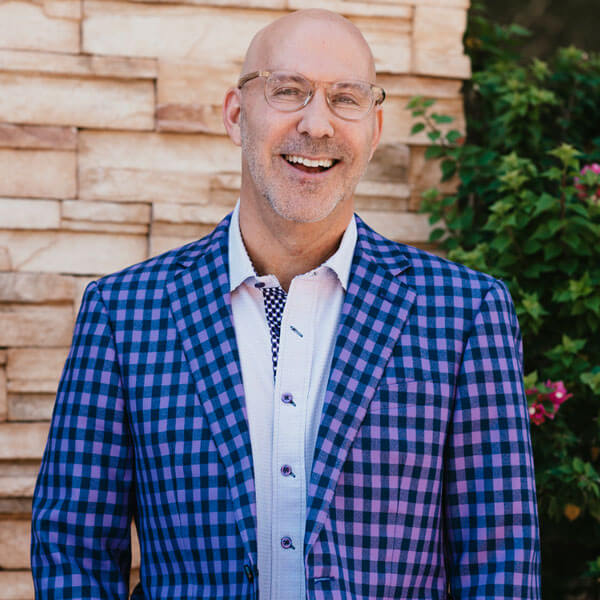
Louis J. Silberman is the CEO and Co-Founder of National Laser Institute, the pioneer of the medical aesthetics training industry and the largest educator in the country. NLI also operates one of the busiest medical spas in the country, seeing up to 3,000 clients per month. Louis Silberman is also an entrepreneur who has been named Ernest and Young’s EY Entrepreneur of the Year Semifinalist.